The field of statistics education tends to focus heavily on introductory courses: How can we engage students who typically struggle in math-based courses? How can we develop statistical consumers? How can we prepare students to be successful beyond introductory courses? However, there is not much literature or resources shared about the teaching of intermediate courses.... Continue Reading →
Visual Inference: Using Sesame Street Logic to Introduce Key Statistical Ideas
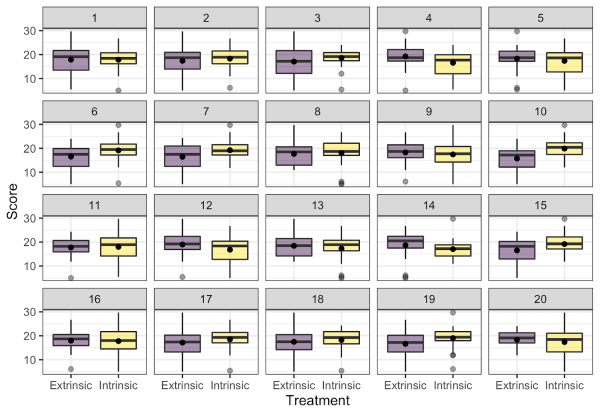
As outlined by Cobb (2007), most introductory statistics books teach classical hypothesis tests as formulating null and alternative hypotheses, calculating a test statistic from the observed data, comparing the test statistic to a reference (null) distribution, and deriving a p-value on which a conclusion is based. This is still true for the first course, even after the 2016... Continue Reading →
How Do We Encourage “Productive Struggle” in Large Classes?
This post is really inspired by a plenary talk given by Jim Stigler at USCOTS 2015. He’s a psychologist at UCLA, and in his USCOTS talk, he emphasized the idea of productive struggle. He talked about different teaching cultures around the world, and how American classrooms often feature “quick and snappy” lessons as opposed to... Continue Reading →
Get the p outta here! Discussing the USCOTS 2019 significance sessions
The theme of this year’s United States Conference on Teaching Statistics (USCOTS) 2019, “Evaluating Evidence,” put an emphasis on the current discussion/debate on p-values and the use of the word “significant” when making statistical conclusions. Conference-wide presentations (1, 2, 3) offered updates to the ASA official statements on p-value based on the special issue of... Continue Reading →
Welcome to StatTLC!
Our editorial team welcomes you to the Statistics Teaching and Learning Corner (StatTLC), a virtual place to chat about statistics education. While there are many opportunities for educators to interact and disseminate research at conferences and in academic journals, there are fewer opportunities to informally discuss and share ideas and experiences. We have decided to... Continue Reading →